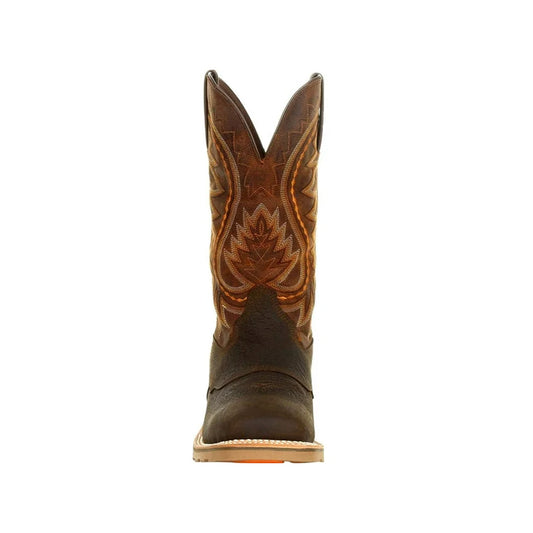
The upper part of the boot protects your shin, instep, ankle and toes. The sole of the boot protects and supports your heel, arch, and ball of the foot, and helps prevent foot fatigue. So far, so good. Now to join those two pieces together and create the final work boot.
When boots and shoes were handmade (and they still can be, if you have the money to spend), the upper and sole were often stitched together using an additional piece of leather called a welt.
The welt was stitched to the upper, and stitched to the sole. The presence of the welt allowed the footwear to be re-soled, so your investment could last longer. However the extra labour ensured this footwear was more expensive, and not affordable for everyone.
In about 1872, Charles Goodyear finalized a machine that would complete this welting process, meaning the shoe could be manufactured more quickly and less expensively.
Boots with Goodyear welts could be more affordable compared to handmade versions, could be re-soled as needed, and did last longer. When you see a boot with stitches around the outside, you’re looking at a Goodyear welt.
Since about the 1970s, most shoes have been made by gluing or cementing the upper part of the boot to the sole. Once the sole wears out, it is not possible to attach another sole to the upper part of the boot. The lifespan of the footwear is much shorter, or is even disposable, but the cost is lower too.
Most work boots are not intended to be disposable. You buy the best fit and get the quality you need, then you break them in by wearing them week in and week out.
Having the option to re-sole the boots preserves the time you spent making them your own, and also costs less than buying new boots.